


From Beginner to Advanced: Mastering Kilter Board Climbing


Written by: Abbie Chipps
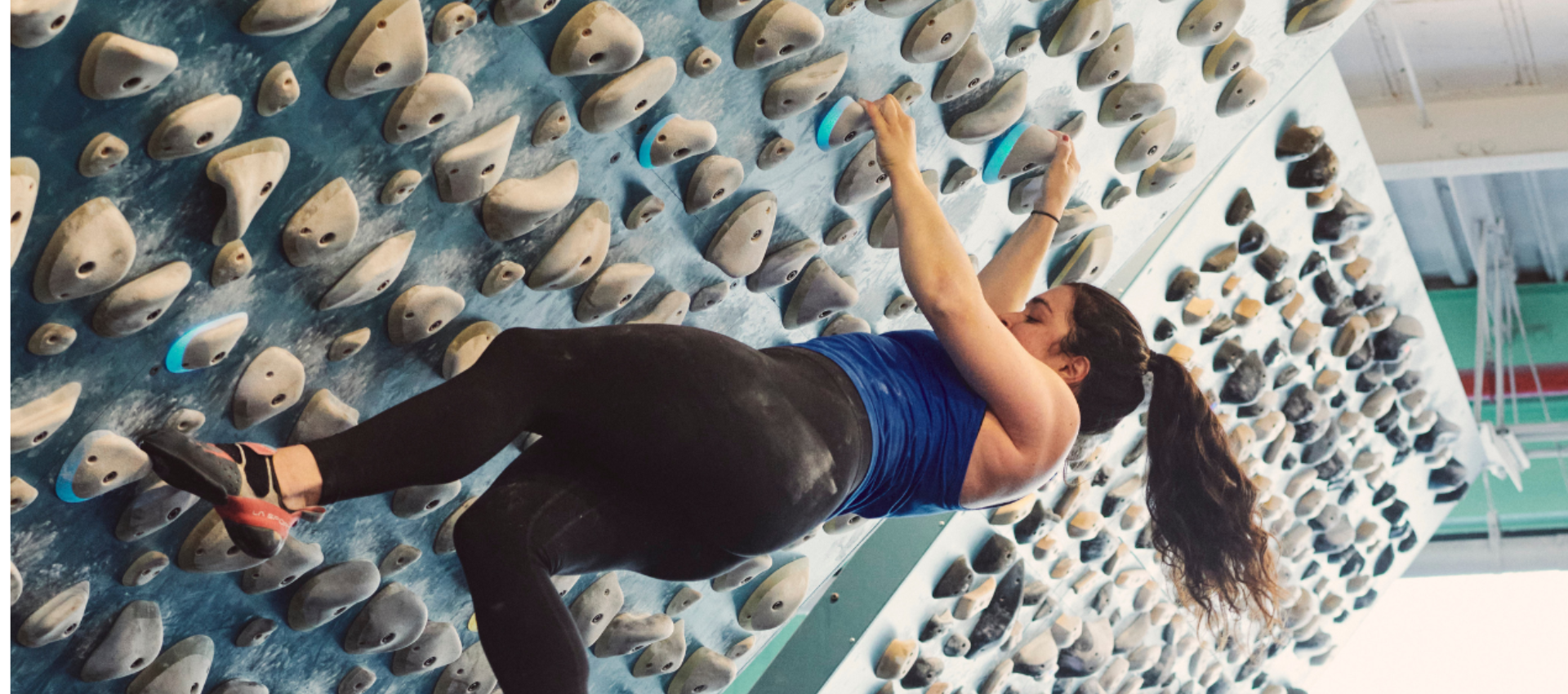
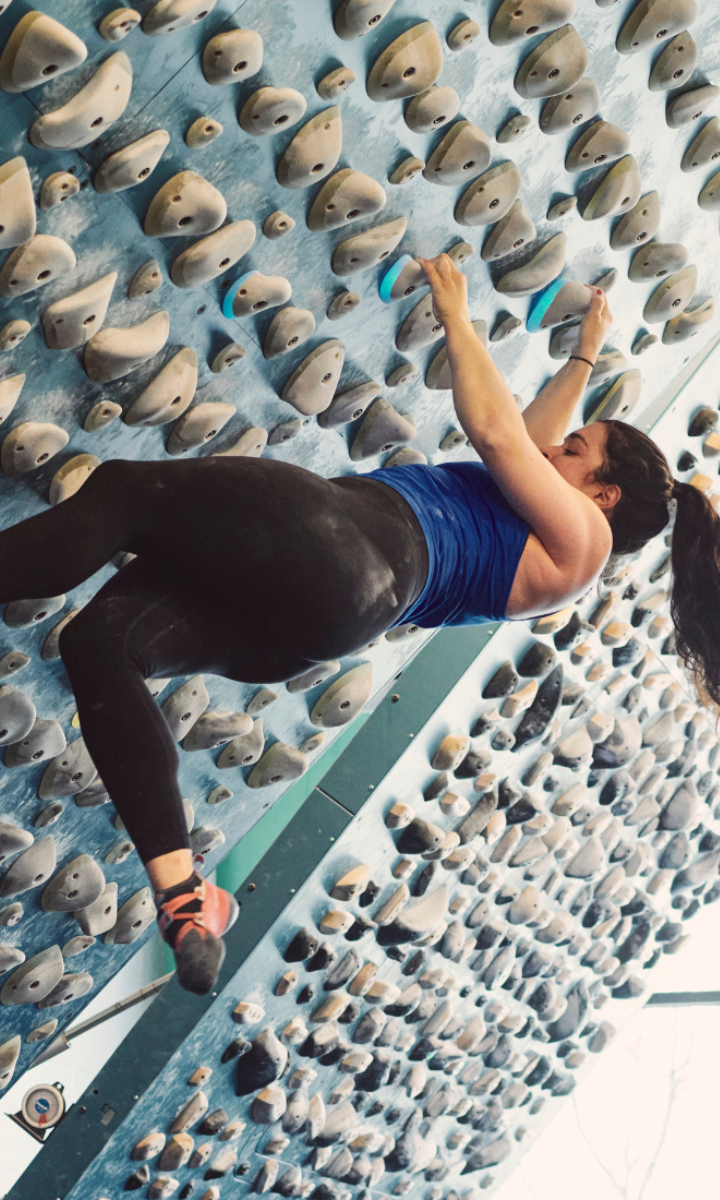
Kilter boards are interactive climbing training walls that users control with a smartphone app. They include pre-created climbing problems of all difficulty levels and include the option to adjust the board’s angle to make it steeper or more vertical. They are one of the most versatile and popular climbing training tools you can find.
In this post, we’ll walk through the basics functions of the board, how to operate the Kilter app, and the best ways to approach this type of climbing if you’re a beginner. For more intermediate and advanced climbers, we’ll look at what skills the Kilter board can help train and explore some tips and tricks to get the most out of your climbing sessions.
What is board climbing?
A Kilter board is just one of the many types of climbing boards available today, including moon, tension, and grasshopper boards. Kilter, like these other boards, features a standardized set of light-up, color-changing holds, allowing climbers to create their own routes in the Kilter app and share them with training partners and friends. The standardization of the hold pattern not only allows for endless route possibilities, but also transferable training on other Kilter boards at other gyms.
Certain boards may also have an adjustable frame, allowing for climbing from 0 to 70 degrees. Love a climb at 25 degrees? Pop the board down to 45 and see how the movements feel at different angles. This degree adjustment helps climbers improve different aspects of their training, from technical footwork to endurance, to overhung power.
Beginner:
For those just getting into board climbing, (or climbing in general), start with the board at a comfortable vertical angle. This will allow you to become familiar with the different holds and their pattern.
Next, familiarize yourself with the light pattern. Different colors dictate different holds in a climb. Starting holds will be yellow, footholds will be green, handholds will be blue, and the finish holds will be purple. It is important to note that starting holds and handholds can also be used as footholds later on in the climb, but footholds may not be used as handholds.
Once you have a grasp on the hold pattern and lights, use the Kilter app to find a comfortable warm up climb. Keep in mind that since all the holds are used for grades from V0-V14, the holds may feel slightly harder than the holds typically used to set easy problems in the rest of the gym. Of all the boards to start climbing on however, the Kilter board offers the most accessible and largest hold types, making it the perfect option for starting board climbing.
Intermediate:
Once your base feels strong and you are comfortable navigating the board and the app, it’s time to get training! The Kilter board can be a great option for intermediate climbers looking to build strength, especially for overhung and outdoor climbing. As previously mentioned, Kilter board holds are typically smaller and more difficult than the holds used to set beginner to intermediate problems in the gym. Start by practicing straightforward and comfortable moves on more difficult holds. While it may be painful or discouraging at first, it is great for building finger strength required for more difficult climbs.
For more intermediate climbers, the Kilter board can also be a great tool to push movements that seem daunting or unattainable. If dynos or big reaching moves make your palms sweat, select two holds for yourself a comfortable distance apart, then slowly move one further and further away. Due to the more accessible hold types on the Kilter board (compared to other boards) it is especially good for practicing big moves and explosive strength. If overhung climbing isn’t your jam, start with the board at 25 degrees, or whatever feels just out of your comfort zone, find an easy climb, and gradually move the board a few degrees down with every climb.
In this stage, it is easy to feel like you are hitting a wall with training, but the Kilter app logbook allows you to track your projects, attempts, and assents, to see your progress in real time.
Advanced:
It’s not uncommon to see the strongest climbers in the gym crowded around the Kilter board for two main reasons. The first is that Kilter boards offer a level of difficulty that most gyms don’t set. Kilter board grading goes all the way up to V14, offering advanced climbers serious challenges that are not always available in the rest of the gym.
Another plus of the board is that, unlike the typical gym, problems are never reset. If an advanced climber has their sights set on V12, a grade that may take them a few weeks or months to complete, there is no racing against the setter’s clock before the climbs change. The problem will be on the app for as long as you need.
Advanced climbers can also venture into setting their own climbs. On the Kilter app, simply select the plus button, which will display the board the phone is connected to, and tap on a hold to light up the board. With this feature, climbers can push their limits and create problems that target their specific training weaknesses.
While Kilter boards are specifically helpful for overhung endurance and explosive power, other board types can help target other training goals. Check out this article to find the right board for your next project.
The Beauty of the Kilter Board:
Venturing into board climbing can be daunting for any climber, but it’s there for everyone at any ability. While we’ve mostly discussed training and the physical aspects of climbing, the Kilter board is also a tool to bring people together. Don’t be afraid to share the board with another climber, no matter the skill level. Take turns climbing your own projects while the other person rests, cheer each other on, and make a new connection or meet a training partner. Much like the routes on the Kilter board, the possibilities are endless.
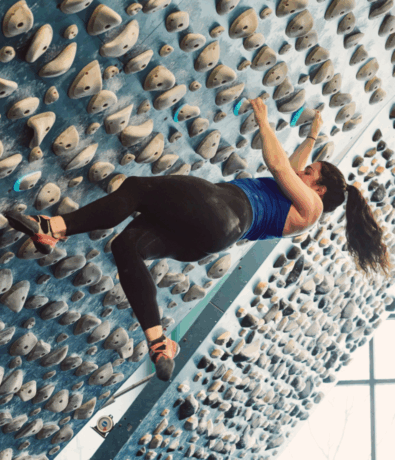
From Beginner to Advanced: Mastering Kilter Board Climbing
Written by: Abbie Chipps Kilter boards are interactive climbing training walls that users control with a smartphone app. They...
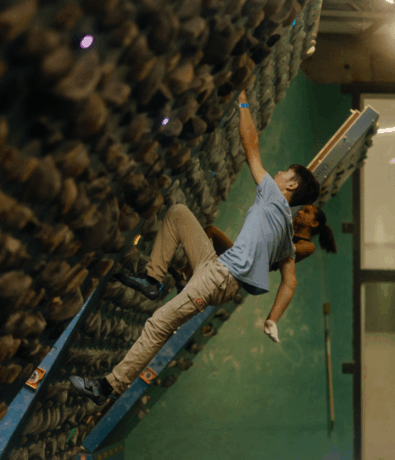
How to Choose the Best Rock Climbing Training Board for Your Goals
Written by: Elise Rehberg From finger warm ups to building explosive power, to training climbing technique, training boards are...
Exploring the Power of Hot Fusion Yoga | Bouldering Project
Written by: Elise Rehberg Bouldering Project is a space built around movement for community. An interconnection of climbing, fitness,...
Heated Yoga Benefits: From Flexibility to Mental Clarity
Written by: Elise Rehberg Yoga asks you to stretch, balance, push, pull, and immerse your thoughts into the moment...
Bouldering Walls Explained: Types, Features, and How to Use Them
-Written by: Elise Rehberg Inspired by natural rock walls, climbing gyms are purposeful movement playgrounds with endless opportunities to...
Types of Climbing Holds: A Beginner’s Guide to Rock Wall Grips
If you’ve ever looked up at a bouldering climbing wall and wondered, “How do people know what to grab?”...